Sri Chaitanya Charitamrita, Adi-Lila Chapter 6 Text 109:
ভক্তভাব অঙ্গীকরি’ হৈলা অবতীর্ণ ।
শ্রীকৃষ্ণচৈতন্যরূপে সর্বভাবে পূর্ণ
Accepting the mood of a devotee, He descended. In the form of Krishna Chaitanya, a perfect person in every way, the Lord descended into this world.
All the Avatars of Vishnu descend with the aim of acting in the role and mood of a devotee of Sri Krishna, and in their sporting and pastimes they engage in service pleasing to Sri Hari. Through relishing the mood of devotion, greater happiness is experienced in the service of the cherished Deity than in the mood of lordship.
Who, then, is Hari, the Deity every other Avatar of God worships?
In the scripture Srimad Bhagavatam, we read that by showing the universe within His mouth to His mother, Krishna revealed divine Avidya, that form of unknowing—a loving unawareness of His own divine majesty—which nourishes Rati within the Chit-shakti.
Thakur Bhaktivinode wrote:
Opening His mouth, child Krishna showed His mother the entire universe within it. Yet because she was charmed by that sacred unknowing which nourishes love within the spiritual Chit potency, she did not acknowledge His divine majesty. Devotees who participate in the Lord’s spiritual pastimes are so captivated by His sweetness that even when majesty is revealed to them they do not want to perceive it. This unknowing does not belong to the realm of Maha-Maya, genuine ignorance; this kind of forgetfulness nourishes the devotee’s feelings of eternal bliss.
Thakur Bhaktivinode elaborated on this statement, writing that Rati or attachment to Sri Krishna, which arises from the Chit-shakti, is different from Isha-bhakti (devotion to God) that arises from the jiva-shakti souls (the souls like we ourselves). The Isha-bhakti of the jiva-atma is dry by nature and devoid of the sweetness of Rasa—it is not of the same nature as Prema-Bhakti (Priti).
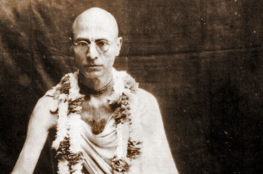
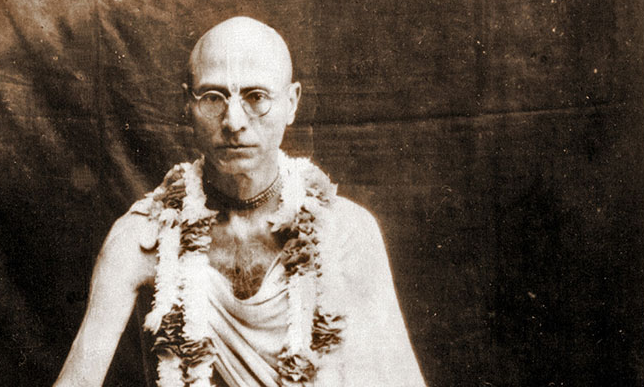
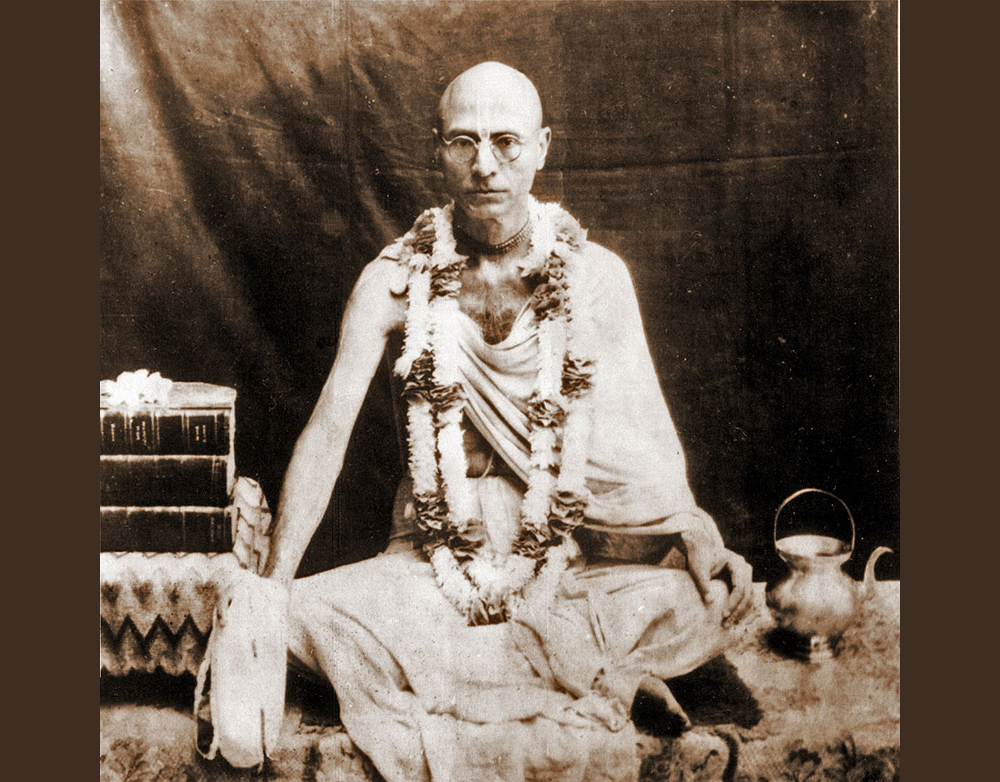
Additionally, Sri Bhaktisiddhanta Saraswati Goswami wrote:
“Sri Krishna is Ananta-lilamaya, the playful enjoyer of an infinity of pastimes; He appears again and again in many eternally existing forms, engaging in His lilas. The Lord’s abode Goloka–Vaikuntha is reflected in the material world, Devi-dhama, a distorted form that mirrors Goloka. Although the variety within the material universe resembles that of Goloka and Vaikuntha, within material nature there is physical limitation, impermanence, inferiority or defectiveness, non-replicability, and disturbances caused by time.
“Every soul in every universe participates in the divine play of the Lord through a specific form of service. The Lord manifests whatever form is fit for the individual soul’s mood of love (Rasa). The Lord’s forms — Krishna, Narayana, Rama, and countless others — correspond to these dispositions retained by different souls. So various manifestations of the Lord’s forms (vishaya-vigrahas) exist eternally in accord with the service-relationship appropriate for each class of dependent souls.
“In the eternal spiritual plane of existence known as Vaikuntha, pure existence is perceived, while, in the material world, existence itself is misconceived, because the jiva soul’s mind is mixed up and filled with consciousness arising from the modes of nature. In the eternal, shared experience of love between the Lord, the object of love (the vishaya), and the devotee, the receptacle or container retaining the mood of love (the ashraya), various kinds of divine pastimes become manifest. “Therefore, when considering the suitability of the embodied condition into which the devotee of God may be born, the statement ‘the human body is the foundation of worship’ proves meaningful — for the human form, endowed with refined emotion, thought, and expression, is most fit for rendering direct personal service to Krishna through affectionate acts such as caring, playing, embracing, or speaking with Him.
“In the order of living beings in the material world, humanity stands at the highest stage. Only in the human form does consciousness awaken with the capacity to inquire about and serve the Supreme Lord.
“When the souls with the nature of devotion to God dwell within the material world, they obtain the right to serve the particular form of the Lord that is suited to their own inner nature. Apart from the Lord’s human-like form, all His non-human Avatars appear within the universe to purify the living beings from all their impurities — that is, the Avatars descend to cleanse the world of sin (not to reveal the sweetness of divine Love and spiritual intimacy).”
The words of Srila Prabhupad illuminate us. We, who were born in the blackest night of ignorance. But what a marvel it is, to be a human being. For scripture itself declares that the true purpose of birth as a human beings is to engage in pastimes of love. It is only human-like beings that are eligible to love Krishna, and to be loved in return!
Previously, Lord Krishna instructed the sun-god in the mysticism of yoga. When that teaching became lost over time, Krishna came into this world and instructed prince Arjuna in the same doctrine, yoga-upasana. At that time, the Lord explained the principle reason underlying His manifest presence in the world:
“O Arjuna, according to the different ways in which My devotees surrender to Me, I reciprocate with each of them. All people follow the paths I make for them.”
Krishna reflected: Whoever offers Me love and devotion, considering Me to be their son, friend or beloved, that person attract Me.
Krishna thinks: When someone engages in loving devotion, believing “Krishna is my son” — that is, the mood termed ‘vatsalya’; or when someone feels, “Krishna is my friend” — that is, the ‘sakhya’ mood; or indeed, “Krishna is my sweetheart” — that is, ‘madhura-rasa’, then I become subordinate to them in response to the love and affection they feel for Me.
Sri Bhaktisiddhanta Saraswati Goswami explained that along with the terms “Bhakti” and “shuddha-bhakti” (pure loving devotion), the word “vaidhi-bhakti” is also mentioned in the scriptures. Thus, we identify three types of Bhakti. When devotion is covered by desires unrelated to Krishna, or covered by desires to accumulate jnana (logical knowledge), karma, or yoga, and includes practices of enjoyment apart from Krishna, then that is called vaidhi-bhakti. Attempts to engage in ‘Bhakti’ where a devotee’s intentions are mixed with karma, jnana, yoga, or enjoyment-related vows are all part of vaidhi-bhakti. This kind of devotion includes acts other than pure devotion; yet in attempts to perform the devotional practices free from these coverings, there is true Bhakti, or “shuddha-bhakti.” This shuddha-bhakti, independent of vaidhi-bhakti, is genuinely attractive to Krishna.
Krishna says, “A mother binds Me with rope when I am naughty, considering Me her son. She rears and protects Me, feeling great affection and a sense of humility.
“Friends, in pure friendship, climb on My shoulders. They say, ‘Who are you? Are you a great person? No, You and I are equal!’
“If a beloved girl rebukes Me, being angry, that rebuke captivates My mind more than the words I hear when the sages sing hymns of the Veda.”
Thinking in this way, Krishna resolves: “Taking these pure devotees forever with Me, I will descend into the world. I will perform wonderful pastimes. I will enact pastimes (lila) which are not displayed even in the eternal spiritual world, Vaikuntha. I will enjoy pastimes that make even I Myself start to marvel.”
Sri Bhaktisiddhanta Saraswati Goswami wrote:
“In Vaikuntha and other transcendental realms, the divine pastimes of Lord Krishna, although manifest, do not exhibit the unlimited, ever-new and astonishing wonders of Krishna’s swarup (His personal form of bliss). Varieties of divine pastimes are manifested in Vaikuntha, yet within them the marvellous charm evoked by Krishna’s own original form does not awaken in the constantly fresh consciousness of the residents of Vaikuntha worlds. Above them — that is, in Goloka, where the pastimes of Krishna’s own self-delight are revealed, there arises the will to manifest pastimes within the material world. Pastimes that are so excellent that when they are seen they create feelings of stunning amazement in the devotees whose devotion is governed by thoughts of majesty. The devotee (ashraya), in her own consideration, forsakes the person toward whom lawful reverence is due — her husband — and, overcome by attachment to Krishna, feels drawn toward Krishna’s sweetness that surpasses His majesty. The devotee then strives to meet Him with her own love, a mood impelled by passionate attraction. This endeavour, known as the parakiya (paramour) mood of service, is accomplished through Yogamaya. The influence of purely spiritual Yogamaya is an inconceivably wonderful mystery, even to Sri Krishna the object of love Himself; it is made possible only by His merciful internal potency, Yogamaya-swarup Herself.
“The mood of a devotee passionately attracted toward the Lord is such that, within the experience of that devotee’s feeling of attraction, the impetus by which passionate emotion arouses the Lord’s innate charm, that impetus or cause is not perceived by the Lord Himself. The innate beauty and sweetness of Krishna awakens through the love of His devotees, yet He, absorbed in the ecstasy of mutual affection, does not see His own splendour is arising because of the devotee’s devotion.
For this reason, in describing the peculiar glory of Yogamaya, the ashraya-vigraha — the devotee sheltering feelings of love—is mentioned as Yogamaya’s instrument and assistant, for Yogamaya arranges a divine concealment that allows both the Lord and His lover to taste shared wonder without awareness of any knowledge of causation.
“The vishaya (object of love, Krishna) and the ashraya (the devotee) each, dwelling within the feeling of their shared mood of love, become absorbed in the feelings of the other’s sentiment; and thus, through that mutual recognition of love of one another, the one is irresistibly drawn to the other.
“Those who wander in the mortal world cannot enter into this knowledge of the variegatedness of divine pastimes, for the plane of material consciousness of the worldly-minded cannot touch the ecstatic stream of transcendental emotion. Unless someone becomes a friend and associate of those who dwell in that truth, or until one’s own heart develops a relish for it, the fortune of attaining this realization of genuine divine love will never awaken within the soul.”
In view of this, I beg to remain forever in the dust of the Lotus Feet of Srila Guru Maharaj, for he can give me that most treasured goal of life.
All glory to Sri Bhaktisiddhanta Saraswati; all glory the Beloved of Varsabhanavi.
Jayo-re jayo-re jaya, jaya Gaura-Saraswati!